
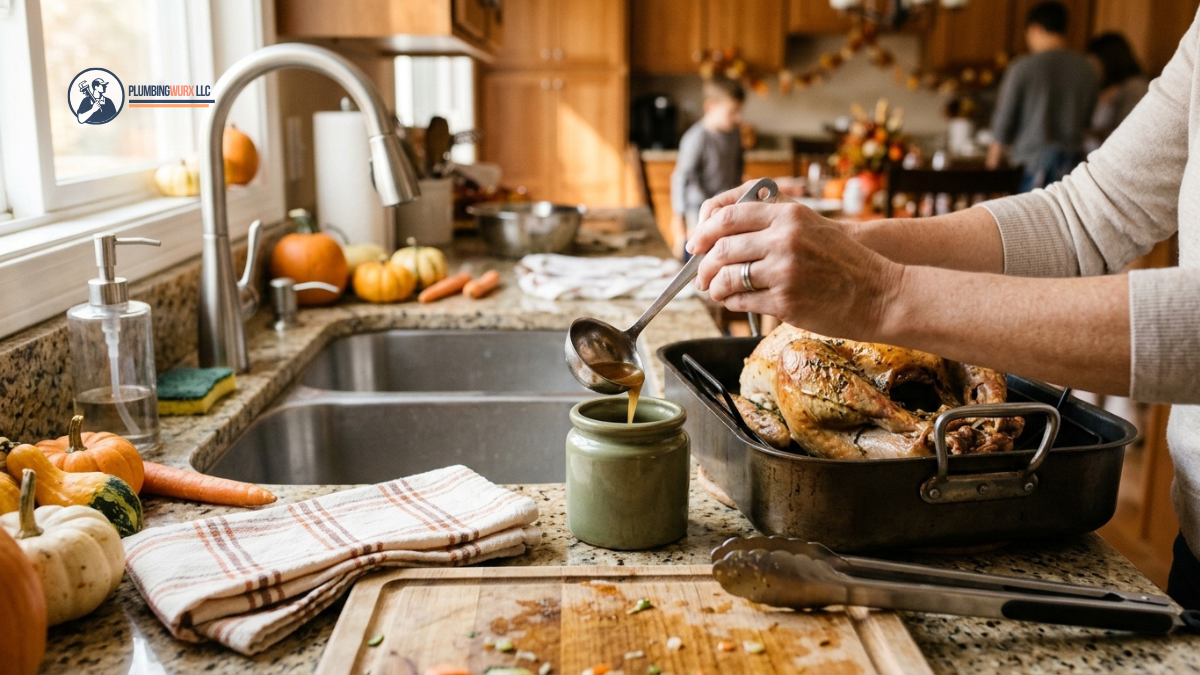
Thanksgiving puts your kitchen to work. Between roasting the turkey, preparing side dishes, and washing stacks of plates, it’s easy to send the wrong things down the sink.
But grease, potato peels, and leftover food can turn holiday cleanup into a clogged-drain problem. Even hot water and dish soap won’t make pouring cooking fat down the drain safe.
Here’s how to dispose of turkey grease, avoid common Thanksgiving plumbing mistakes, and handle a kitchen sink that won’t drain.
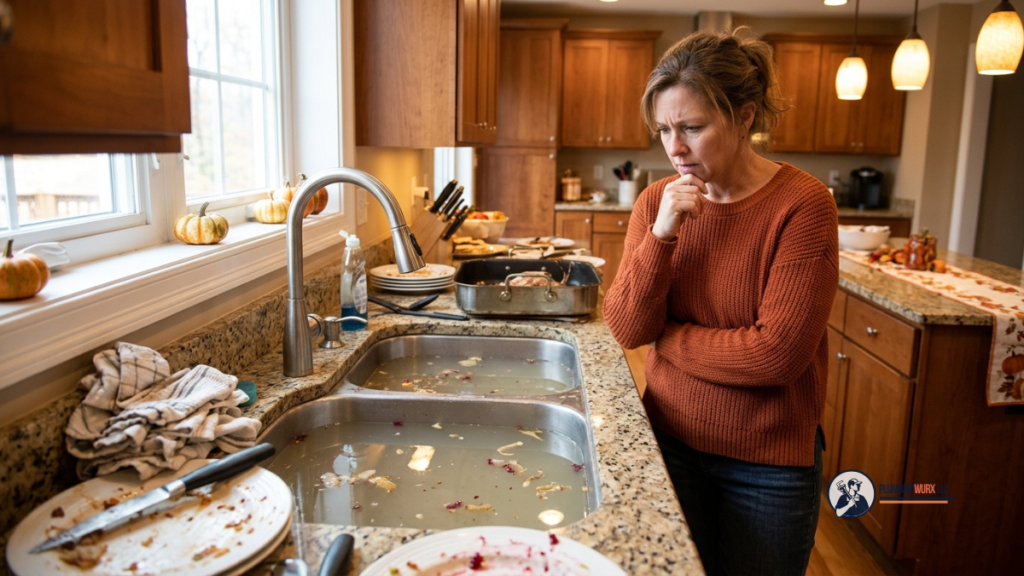
Can You Put Turkey Grease Down the Drain?
No. Never pour turkey grease down the drain, even when it’s hot and liquid. The same rule applies to butter, meat drippings, cooking oil, and other fats.
As grease cools, it can thicken or solidify inside your plumbing. Even oils that stay liquid at room temperature can contribute to buildup, coating pipe walls and collecting food particles. Over time, that buildup can restrict water flow and cause a stubborn blockage.
A garbage disposal doesn’t solve the problem. It grinds food waste, but it doesn’t remove grease from wastewater or prevent it from collecting farther down the drain.
How to Dispose of Turkey Grease Safely
Keep a container nearby while you cook so grease never needs to go near the sink.
- Let it cool safely. Allow hot drippings to cool enough to handle before transferring them to a suitable heat-safe container. Never pour hot grease into thin plastic.
- Collect it for disposal. Once fully cooled, seal the container and place it in the trash if local waste guidelines allow. Some communities also offer cooking-oil recycling.
- Scrape before washing. Remove cooled fat and food residue from roasting pans with a spatula.
- Wipe away the remaining grease. Use a paper towel to remove the greasy film before washing cookware.
Don’t use the toilet as an alternative disposal route. Grease, food scraps, and greasy paper towels belong out of your plumbing. Our guide to what can and can’t be flushed down the toilet explains which everyday items can cause trouble beyond the kitchen sink.
Can You Pour Grease Down the Drain With Hot Water?
No. Hot water may keep grease moving briefly, but it doesn’t eliminate it. As the water cools farther along the drain line, fats can thicken and stick to pipe walls.
Dish soap isn’t a reliable workaround, either. It helps lift grease from cookware, but it doesn’t guarantee that a large amount of fat or oil will pass safely through your plumbing.
The distinction is simple: washing a wiped-down pan is normal cleanup. Pouring a pan full of turkey drippings into the sink is not.
If grease has already contributed to recurring blockages, a plumber may recommend drain snaking or, where appropriate, hydro jetting. Our article on hydro jetting and how it compares with snaking explains these methods and why a plumber should assess the condition of your pipes before choosing a treatment.
Can Potato Peels Go in the Garbage Disposal?
It’s best to keep potato peels out of the garbage disposal, especially when preparing a large batch of Thanksgiving mashed potatoes.
Large quantities of peels and starchy scraps can overwhelm the disposal and contribute to blockages in the drainpipe or trap. Just because the disposal grinds something doesn’t mean it will move easily through the rest of your plumbing.
To keep potato prep from causing a clog:
- Peel potatoes over a bowl or cutting board instead of the sink.
- Put peels in the trash or compost them where appropriate.
- Scrape mashed potatoes and other starchy leftovers into the trash before rinsing dishes.
- Use a sink strainer to catch scraps during cleanup.
Treat your disposal as a tool for small amounts of suitable food waste, not a substitute for the trash can. Follow your model’s instructions for what it can handle.
What Other Thanksgiving Plumbing Mistakes Should You Avoid?
Grease and potato peels aren’t the only troublemakers. These habits can also leave you with a backed-up kitchen sink.
Overloading the Garbage Disposal
Feeding a large amount of food into the disposal at once can cause jams or contribute to a drain blockage. Keep large scraps out, feed suitable scraps gradually, and run cold water as directed by the manufacturer.
Avoid tough, fibrous waste such as celery stalks, corn husks, and onion skins, which can be difficult for some disposals to process.
If your disposal starts humming without grinding, switch it off rather than continuing to run it. Our plumbing FAQ covering humming garbage disposals discusses possible jams and when persistent problems need professional attention.
Putting Turkey Bones Down the Disposal
Turkey bones, fruit pits, and other hard scraps can jam the disposal or damage its components. Put them in the trash rather than testing your disposal’s limits.
Even a powerful disposal has restrictions. Check the manufacturer’s guidance instead of assuming that anything small enough to fit down the opening is safe to grind.
Using Chemical Drain Cleaners
A slow sink can make a chemical cleaner seem tempting, especially with guests arriving. But these products can cause burns, splash back from standing water, and damage certain plumbing materials if used improperly. They may also leave the underlying blockage unresolved.
Never mix drain cleaners with each other or with other cleaning products. If you’ve already used one, tell your plumber before any work begins.
For a closer look at the limitations of household fixes and the equipment plumbers use for stubborn blockages, read our comparison of professional drain cleaning versus DIY methods.
Ignoring a Slow-Draining Sink
A sink that drains slowly before Thanksgiving may already have a partial blockage. Extra cooking and dishwashing can make an existing problem worse.
Watch for recurring clogs, unpleasant odors, gurgling, or water collecting in the sink. Our article outlining four signs it’s time for professional drain cleaning explains why these symptoms deserve attention before they become a complete backup.
Running the Dishwasher Into a Backed-Up Sink
Many dishwashers drain through the kitchen sink’s plumbing. If the sink is already clogged, running the dishwasher may cause more water to back up.
Pause dishwashing until the drain problem is resolved. Adding more water won’t clear a blocked pipe and could leave you dealing with an overflow.
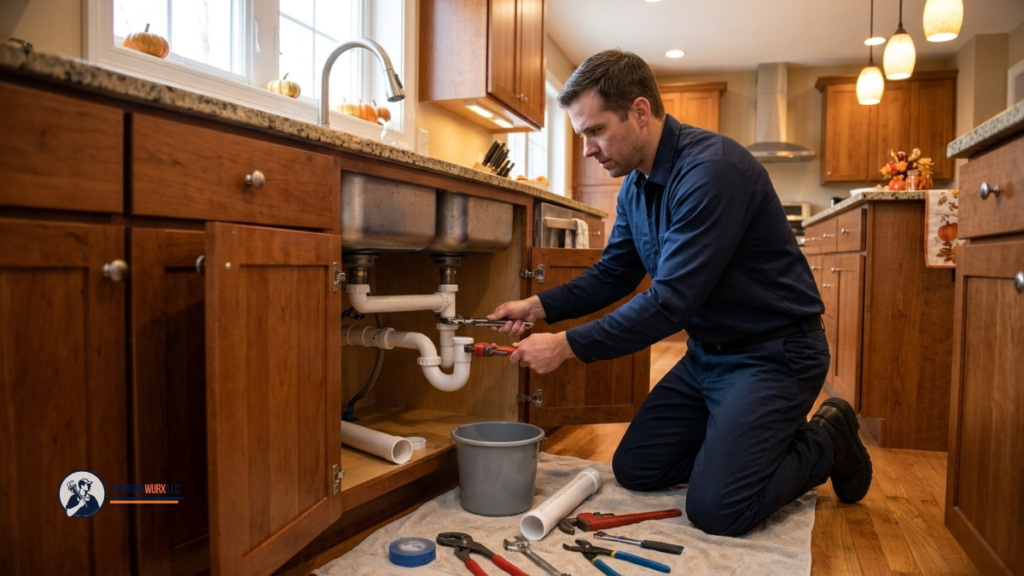
What Should You Do if Your Kitchen Sink Clogs During Thanksgiving?
If your kitchen sink stops draining, focus first on preventing an overflow and avoiding unsafe fixes.
1. Stop Adding Water
Turn off the faucet and stop using the dishwasher. Switch off the garbage disposal if it’s running. Don’t keep running it in the hope that it will clear a blockage farther down the pipe.
2. Try a Sink Plunger, if It’s Safe
For a minor clog, a cup-style sink plunger may help. Use enough water to cover the cup and create a seal around the drain. On a double sink, seal the other drain opening before plunging.
Do not plunge if you’ve added chemical drain cleaner. It could splash hazardous liquid onto your skin or into your eyes. If the sink has a disposal, disconnect its power first and follow the manufacturer’s guidance.
3. Handle Disposal Jams Carefully
Never reach into a garbage disposal, even when the wall switch is off.
Disconnect power before troubleshooting and follow the manufacturer’s jam-clearing instructions. If the unit hums without turning, switch it off rather than repeatedly restarting it. Call a plumber if you’re unsure how to proceed.
4. Know When to Call a Plumber
Get professional help if:
- The sink remains blocked after a brief, safe attempt to clear it.
- Water repeatedly backs up during normal use.
- Multiple fixtures drain slowly or back up.
- You notice a leak, sewage, or an overflow you can’t control.
A clogged kitchen sink alone isn’t always an emergency. However, active flooding or wastewater backing up into your home needs prompt attention. Our guide to 24/7 emergency plumbing in Hagerstown covers common urgent problems and steps you can take while waiting for help.
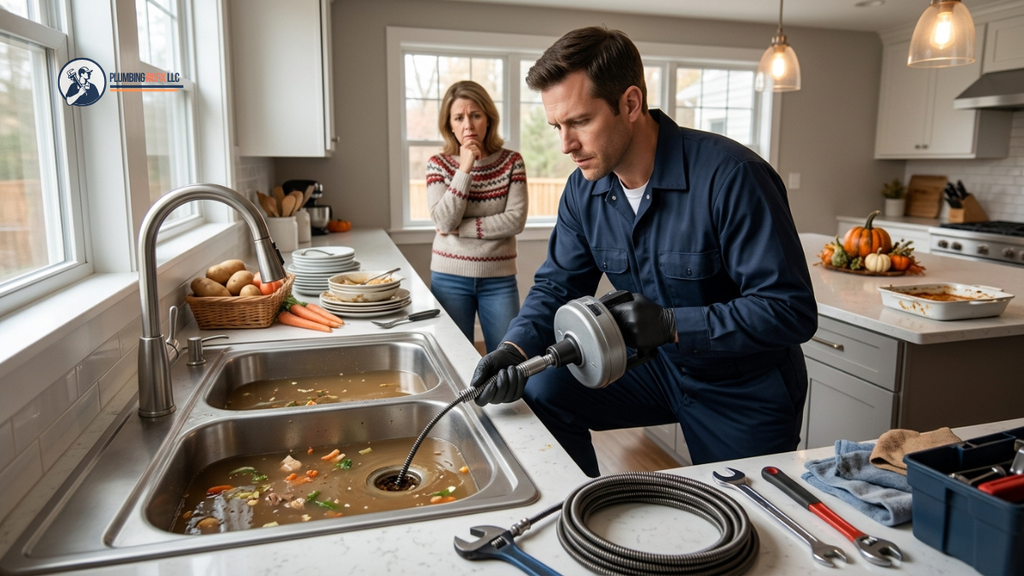
Need Help With a Clogged Kitchen Drain? Contact PlumbingWurx
A few simple habits can help protect your kitchen plumbing: collect grease in a container, scrape dishes before rinsing, catch scraps with a strainer, and deal with slow drains before guests arrive.
If a stubborn blockage still interrupts your holiday, PlumbingWurx’s clogged drain services in Hagerstown address grease buildup, food waste, and other common causes of backed-up sinks. Our team can assess the problem and recommend an appropriate cleaning method for your plumbing.
Call (301) 264-7577 for help getting your kitchen drain flowing again, so you can get back to enjoying Thanksgiving.





0 Comments